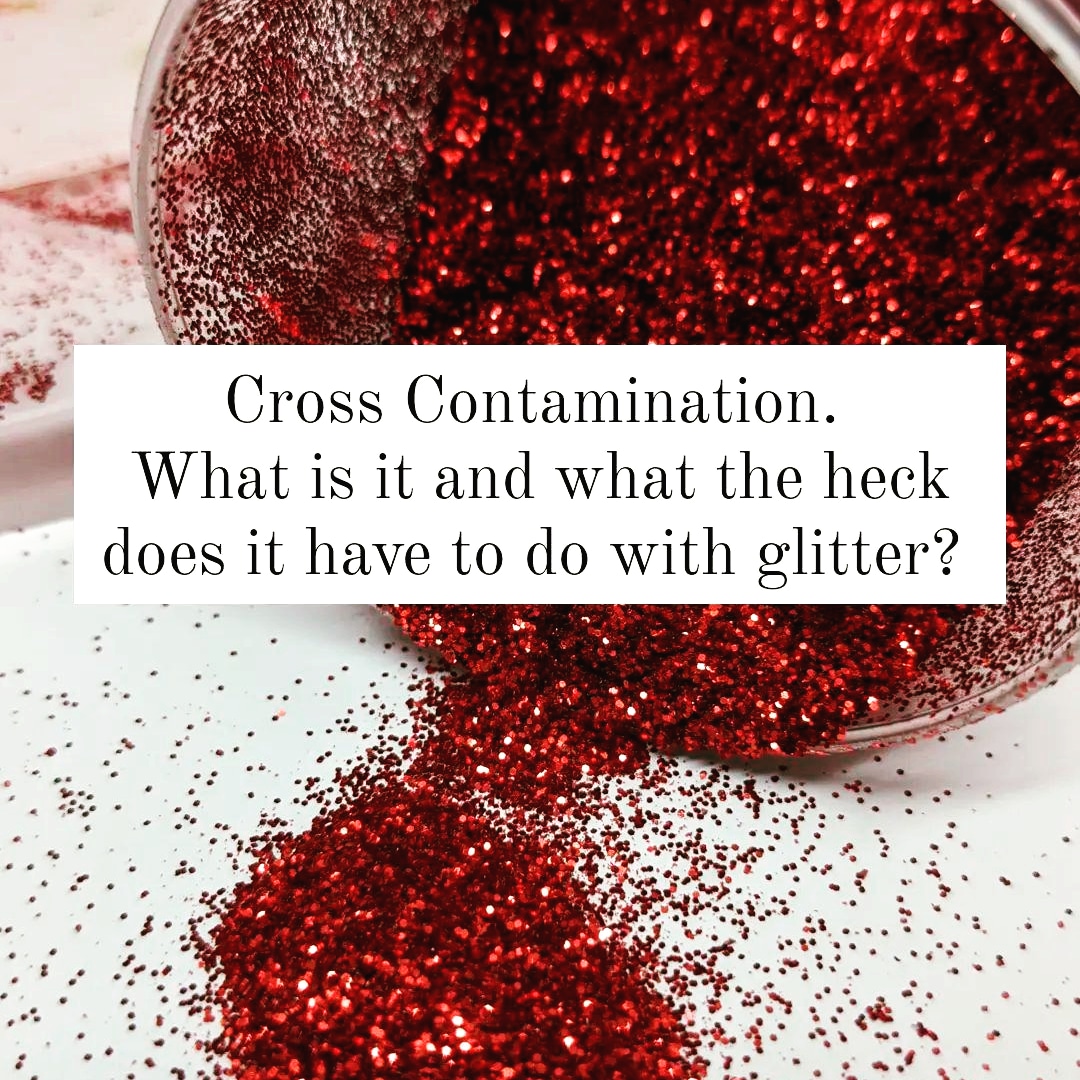
Cross contamination, what does it mean?
Here is the definition: “The process by which bacteria or other microorganisms are unintentionally transferred from one substance or object to another, with potentially harmful effect.”
But I’m always working clean, you might say! And you probably do, but you can never be sure, that everyone, every supplier, every other person around you, your wife, your colleagues and especially children do the same. Let me give you a sparkly example that will -hopefully- stick with you.
I’m working in nurseries most of my time these days and I noticed one thing: The minute you enter any nursery, you’ll contaminate yourself with glitter or paint and you won’t be able to get rid of it until you stop working in nurseries. On my first day working with children I made someone a sandwich and I was in the kitchen, hands washed, uniform and everything, not even the same room as the glitter and still managed to get golden sprinkles on the cheese.
Imagine you’re throwing a birthday party and one of the guests brings glitter. How many people, rooms and pets will have glitter on them when the party is over and how many will take glitter home without noticing? – That’s exactly how cross contamination works.
You don’t really mind the glitter, but you’ll wash your hands – and leave a bit of glitter in the sink or on the tab, where the next person will touch it – and spread it further. You’re hoovering some of the glitter leftovers, but the hoover is spreading the little bits you miss all over the rest of the house and will continue to do so everytime you hoover.
You wipe some glitter away with a clean cloth that you rinse afterwards – and when you then wipe away some stains on your dinner plates and suddenly find some glitter. Nice, right? No.
Imagine you and the people around you cannot see the glitter, but it can potentially harm you or the people around you. It doesn’t matter how good your intentions are.
Glitter. Sticks. To. Everything.
And glitter travels far – even if you have the best of intentions. It sticks to your hair, your shoes, your bottom, your clothes, door handles, mops and food.
So does peanut dust, flour particles and pathogens.
Work as clean as possible, use separate and clean areas to prepare high risk foods, use sanitisers and always wash your hands. It can save someone’s life.
If you like my work, feel free to buy me a Coffee on ko-fi.
 Jana Jarrett Nutrition