
The field of nutrition and nutritional coaching is full of self proclaimed experts, coaches and health gurus, all giving “essential”, sometimes contradicting, sometimes dangerous advice. The title nutritionist or nutritional coach is not regulated in this country or in Germany, where I received my qualification and that means, it’s opened to everyone coming up with their own version of what is important for your health – and consequently with a pyramid scheme or a supplement that only they offer and is cheap compared to aaaaall the health bills that will add up when you’re in your 60s – and nothing is more important than your health, right?
While this is correct, it is actually fairly easy to get all the micronutrients as vitamins and minerals from a balanced nutrition – and supplement the rest or make a conscious effort to implement a variety of nourishing ingredients into your daily diet. Most misconceptions on malnutrition and essentials exist in the context of vegan nutrition and in the feeding of toddlers. Everytime someone says to me that children need more protein and a low carb diet, I would like to make the child in question a nice sandwich, hoewever, judging people cannot and should not be the solution. My approach will always be to gently educate parents, chefs and nursery practicioners rather than just changing things without explaining them – given the other side is willing to listen.
Carbohydrates (starchy foods, fruit, vegetables and milk) should be the majority of your toddlers nutrition, followed by protein and healthy, fatty acids. Fat is also supporting the absorbtion of fat soluble vitamins. Additionally your toddler should have access to water and unsweetened, cool tea and salt and sugar intake should be limited to the absolute minimum. Your nursery should ideally provide a balanced meal plan without any salty snacks, such as crisps and should not offer sweetened drinks or candy, cookies or refined sugar containing puddings.
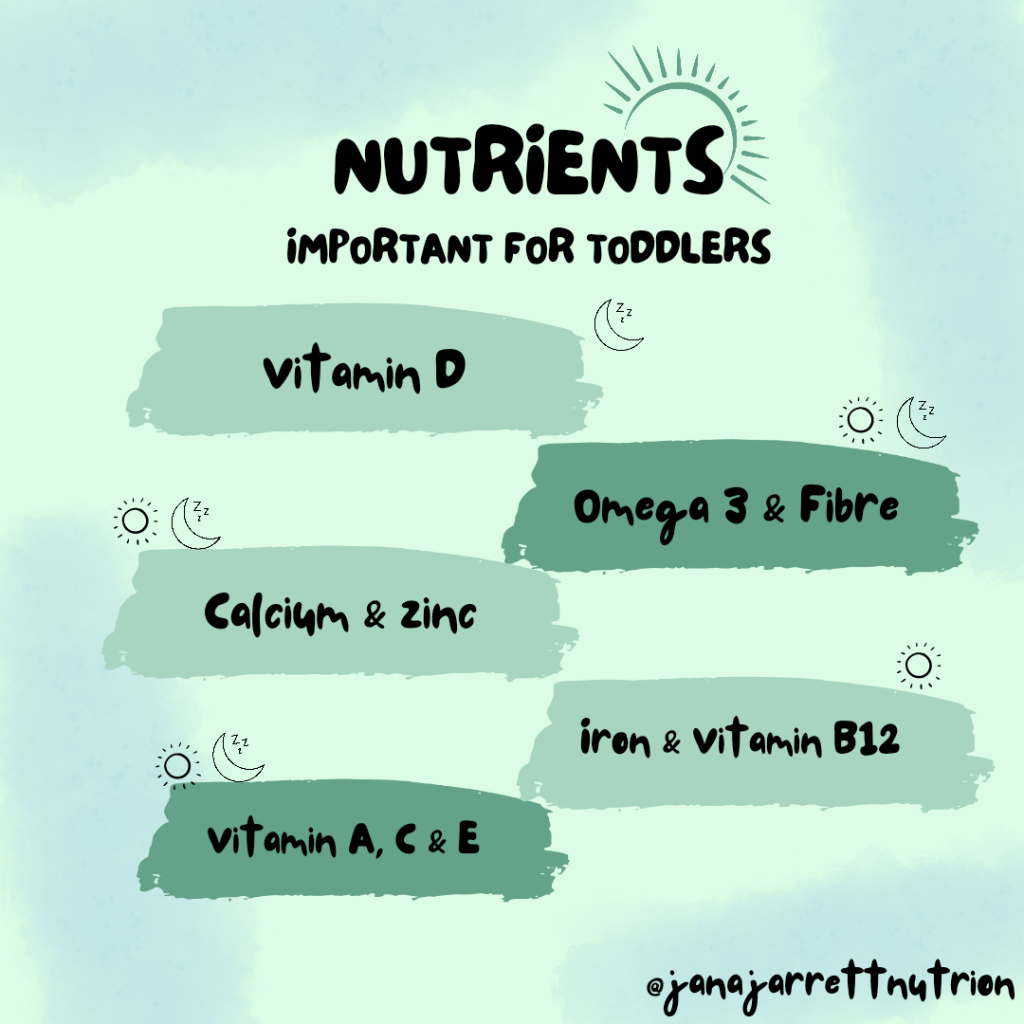
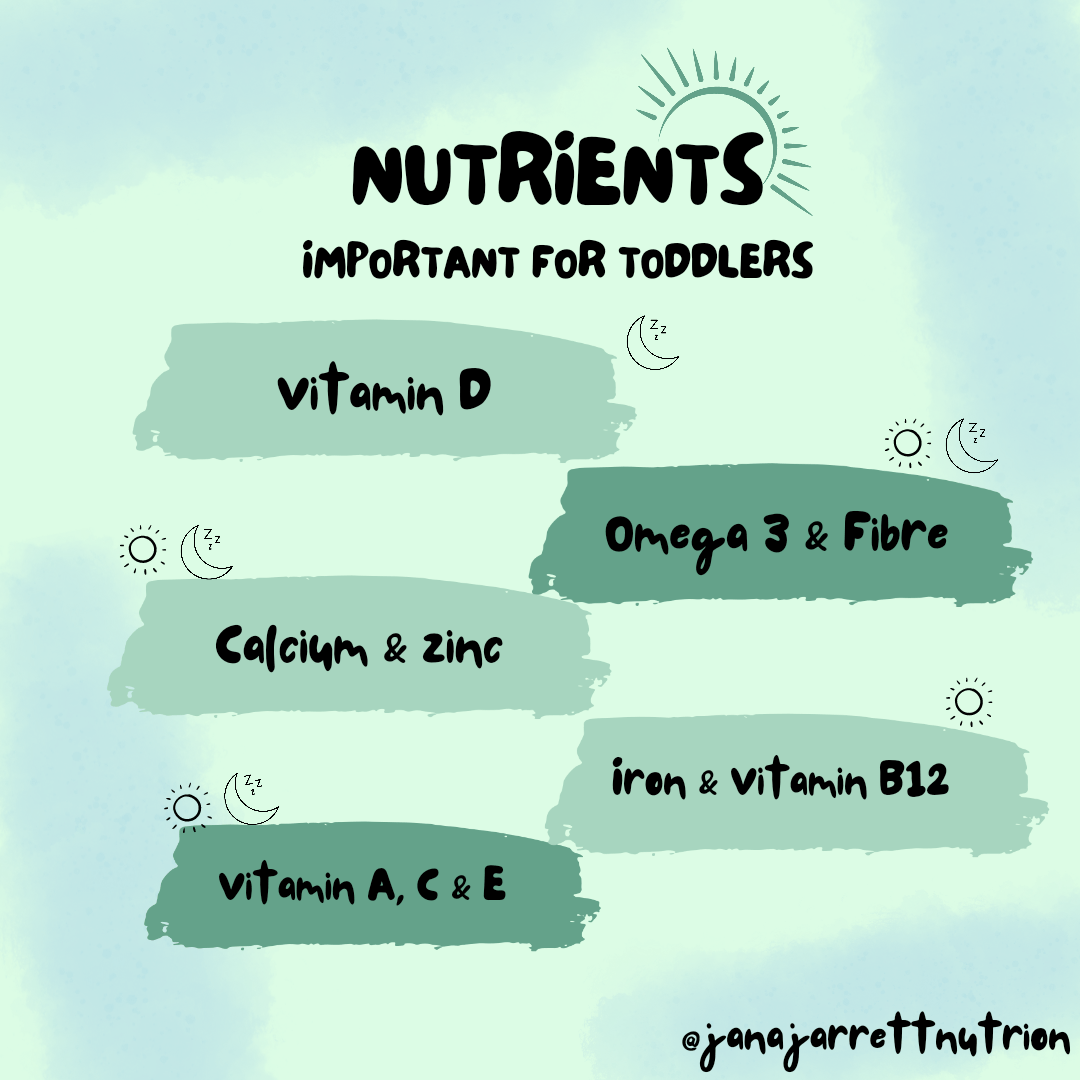
The micro-nutrients most important for toddlers you find in the graphic on the right – I will talk about them one by one and give you sources to add them to your toddlers diet – or your own. I will add some nutrients for allergic children (nuts, gluten and dairy) in the coming post for vegan nutrition and will currently focus on a regular omnivore diet.
Vitamin C – is probably the most commonly recognised vitamin and very important for the support of the immune system and therefore the primary way to fight infections and stay healthy. Additionally it supports the absorption of iron and therefore supports the transport of oxygen to all cells in the body. Sources are broccoli, citrus fruits and juices, red peppers, kiwis and potatoes.
Iron – is a mineral rather than a vitamin and is responsible for the transport of oxygen. Iron deficency can make you very tired and weak, short of breath and a lack of red blood cells. Especially people getting periods should have an eye on their oxygen levels. Sources are red meat and organ meat, pumpkin seeds, lentils, chickpeas, hempseeds and spinach.
B vitamines – play an essential role in a lot of processes in the body, including the production of blood cells in the bone marrow, release of energy from carbohydrates and fat and cell devision, especially during growth spurts. Vitamin B12 is essential for physical and mental development, especially in earlier years. Sources are whole grains and legumes, seeds and nuts and dark, leafy vegetables such as kale, spinach and broccoli.
Vitamin A – needed for development and maintenance of eye health, cell growth and reproduction and the immune system. Sources of preformed Vitamin A are fatty fish, dairy products and eggs. Sources of Provitamin A, which is turned into Vitamin A by our bodies is found in squashes, carrots and sweet potato.
Calcium – very important for bone growth and strength, healthy teeth and nerve tissue and the support of blood vessels. It most often gets associated with bone growth, but also plays an essential role in regulation of heart rhythms, blood clotting and functionality of the nervous system. Sources are dairy products, soy beans, fortified plant based milks and breads and water enriched with calcium.
Zinc – is mainly responsible for cell growth and regrowth and processing your macronutrients, being carbohydrate, fat and protein in food sources. It also helps with the healing of wounds and building scar tissue. Sources are mushrooms, cashew nuts and sesame seeds, along with red meats.
Omega 3 – is an essential, complex fatty acid, that is important for your cardiovascular health, blood vessels, lung function and hormone systems. It is especially important for toddlers as it is crucial for the development of the retina and the brain. Sources are fatty fish, such as mackerel, sardines and salmon, nuts and seeds and linseed oil or rapeseed oil.
Vitamin D – is also called the “sun vitamine” and it is nearly impossible to get enough of it over the darker seasons in the UK or Europe. The body creates vitamin D from sunlight exposure, but since it is also essential for toddlers and children to have sufficient UV protection it is the only Vitamin that you should consider supplementing all year long in both yourself and your child or children. Vitamin D regulates the amount of calcium and phosphate in your body and supports bone, teeth and muscle health. Especially in a growing child that is essential. Additionally Vitamin D deficiency is often misdiagnosed as depression or more serious illnesses, as it has a significant impact on the body and nervous system.
Vitamin E- helps strengthening the immune system and is responsible for healthy skin, eyes and hair and the health of your blood and brain. It is an antioxidant, meaning it prevents cell damage and long term heart diseases or strokes. Sources are sunflower seeds, peanuts and unsweetended peanut butter, pumpkin and squash and fortified breakfast cereals.
Fibre – is not a nutrient and rather an indigestable material, found in starchy and leafy foods, such as wholegrain or greens. It makes us feel fuller, supports healthy and regular bowel movements and digestion and prevents constipation. If you choose your 5 portions of fruit and vegetables during the day and throw in a granola bar or a slice of brown bread here and there you are covered for fibre – don’t overdo it though, too much fibre can have the opposite effect, especially in children.
Disclaimer: I am not a general physician (GP), I’m a nutritionist. Although everyone needs both macro- und micronutrients, the amount you or your child might need additionally to your nutrition is based on your meals, sun exposure, daily activity, illnesses and allergies and so much more. Rather than supplementing blindly, ask your GP for advice or ask them for your blood work beforehand.
 Jana Jarrett Nutrition