… when feeding a toddler.
If you are a parent and your child has recently started weaning, or is in nursery you have probably done a quick google search on what your toddler should and shouldn’t eat. And as usual when it comes to anything to do with children, the opinions, covered as “professional advice” are endless and often not only contradictory, but flat out false.
Your child is currently exploring their options when it comes to food, but they are also learning countless things, like taste, texture, how to chew and swallow things and developing a taste for things. You will notice that facial expressions are often more insulting than the actual reactions and that couscous and rice will soon become your least favourite foods, as they end up everywhere and are there to stay everywhere, no matter how often you hoover (psssst… if you can, let it dry and then clear it up, it’s a hundred times easier). Okay, this probably sounds familiar, as this is the same intro as it was for the post “10 foods to avoid (when feeding a toddler)” – if you don’t know that one, just click on the link.
Number 1 and the one you probably read online to avoid at all costs – nuts & peanuts. Before you now close this blog page forever and decide that I can impossibly be right, hear me out and I explain why! First of all, they are a common allergen, which probably makes you reluctant to introduce them early on. However, pushing it further and further to introduce allergens can actually increase the risk of an actual allergy. The second reason is the fact that they are a choking hazard. Peanuts are small and can easily be inhaled and lodged in the esoephagus, same with smaller nuts and seeds. When introducing nuts, always make sure to start with a tiny amount of nut- or seed butter. Nut butters can also be a choking risk, as they are very sticky and can stick to the roof of the mouth of your toddler. Start small and keep calm – and offer a drink with it.
Number 2 is full fat milk & yoghurts. Yes, differently to adults, babies and toddlers should have full fat everything, unless advised differently by their primary physician. Their calorie intake is surprisingly high, given their size and are always on the move to explore their surroundings. Dairy or plant based milk provide calcium, fat and protein and is absolutely vital for the health and maintainance of bones. There is no problem with going plant based on this one, just make sure your choice of product is fortified and full fat.
An obvious number 3 is whole grain products, such as brown rice, wholgrain bread and pasta – but careful here, as the high amount of fibre can actually cause constipation, especially when the child is alternating between breast feeding and weaning and doesn’t drink a lot of water yet. If you’re unsure, just mix brown rice with white rice for example.
Number 4 is sweet potato. Its sweetness and texture makes it an ideal weaning starter. Additionally it provides calcium and vitamin A, among other nutrients and you can use it to sweeten dishes slightly. However, don’t underestimate the humble potato, which is also rich in vitamins, minerals and antioxidants.

Number 5 – Breakfast cereal. Of course we’re not talking cocoa pops or fruit loops here, but it doesn’t have to be bram flakes or whetabix only. Many breakfast cereal brands cater almost exclusively to toddlers and children and therefore combine a low sugar content with minerals, such as iron, vitamin B12 and folic acid. To find a good brand, it’s useful to check the nutriscore – as it compares foods within a specific food group. Any nutri score between A and B is recommended.
Eggs are our Number 6, due to the healthy fats, protein content and their variety. Eggs are easy to prep, can be fried, boiled, scrambled and baked. Try filling a cupcake tin with vegetables and crack an egg into each mould or simply serve boiled eggs, cut into wedges.
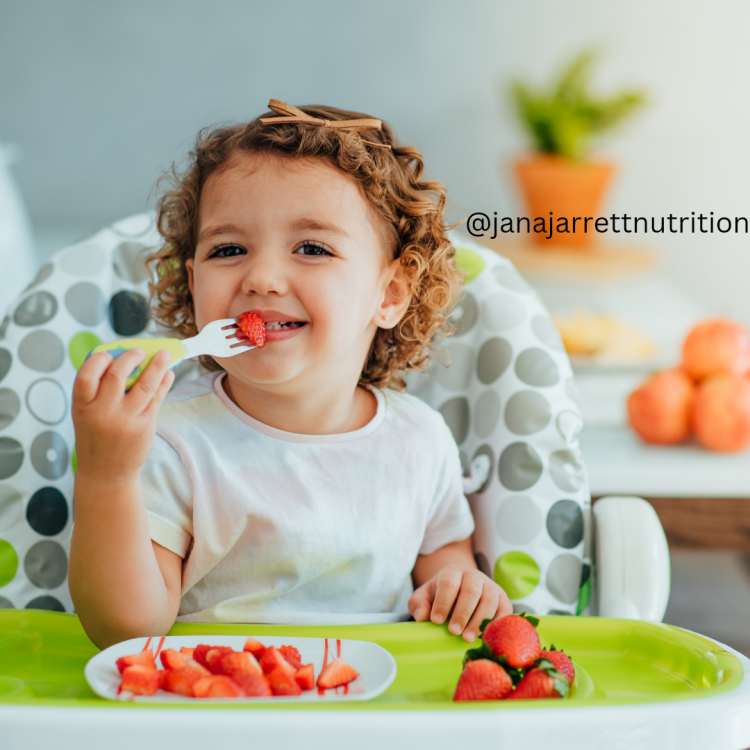
Number 7 are berries, fresh, frozen or freeze dried. They are considered a “super food”, meaning they have a high nutritional value compared to the amount you have to eat and their calorie density. Big berries should be quartered, small berries crushed. You can also mix berries into porridge, yoghurt or into a smoothie.
Legumes have a lot of benefits, such as fibre, protein, carbohydrates and a variety of vitamins and nutrients. They are an absolute powerhouse when it comes to nutrition. Personally, I use them in every sauce I cook, as they can be easily blended into dishes and provide extra nutrients. This makes them our number 8. Don’t limit them to sauces though, they give texture in biscuits and breads, can be used in dips and as spreads.

Number 9 – Omega-3 acids help all cells in the body to function as they should and are absolutely vital for growth, health and brain development. Omega-3 is predominantly found in fish & seafood, such as mackerel, salmon and tuna, but can also be found in nuts and seeds. Supplementing Omega 3 is not a crime and makes introducing fish and seafood easier, as it removes the added pressure of having to provide certain levels of nutrients. Additionally, fish often comes with high mercury levels and should be avoided for babies and toddlers. You can find Omega-3 drops in a pharmacy or any larger supermarket, that you can use in drinks or food.
Number 10 is not a food and rather a bit of advice, but a variety of textures are really important for your toddler. Not only will they learn how to chew and swallow, but they also have to become familiar with how to move food around when it’s in their mouth and what to expect when being served a variety of food. Feeding challenging textures can be scary, as there might be a lot of coughing and gagging involved. That is perfectly normal, as your child is only just learning how to eat.
Head over to my instagram for a post on gagging & choking and what the signs are.
I hope this article helped you! If you liked the read, maybe you also like my article about feeding children or cooperation pebbles. You can also follow me on instagram.
(All featured images are stock photos from Canva)
 Jana Jarrett Nutrition